




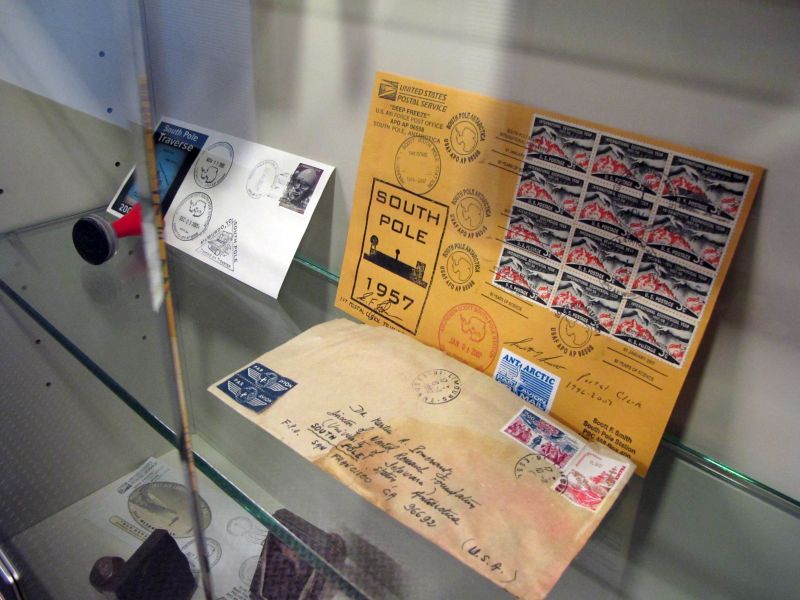
Stamp enthusiasts sometimes collect mail from Antarctica for its unique postal markings. The U.S. National Science Foundation has a procedure to support philately (stamp collecting) at a level that does not interfere with the science mission in Antarctica.
Collectors interested in receiving mail from Antarctica may obtain a maximum of two covers (self-addressed stamped envelopes) a year by sending them to the addresses below at the three year-round U.S. Antarctic stations.
Covers will not be processed unless these guidelines are followed:
- No more than two covers per person per station per year.
- Covers will be processed for personal (noncommercial) use of individuals only.
- U.S. correspondents must use domestic first-class postage for the APO addresses and international first-class or air mail postage for the NSF Palmer Station address.
- Non-U.S. correspondents must use international first-class or airmail postage.
Processing philatelic mail is done in addition to station personnel's regular duties, so please be patient. Delays can be up to a year or more.
Addresses to request philatelic mail:
NSF McMurdo Station
Philatelic Mail Clerk
PSC 769 BOX 700
APO AP 96599-1035
NSF Amundsen-Scott South Pole Station
Philatelic Mail Clerk
PSC 768 BOX 400
APO AP 96598-0001
NSF Palmer Station
c/o Maersk, SA
Depósito Franco Antártico
P.O. Box 60-D
Punta Arenas, Chile