

We support cutting-edge research facilities and infrastructure that span the globe, from mountaintop observatories and ocean vessels to powerful electromagnets and supercomputers.
Every day, researchers use NSF's facilities and infrastructure to devise new materials for manufacturing and medicine, improve responses to natural catastrophes, understand weather and global atmospheric patterns, and explore extreme environments — from celestial bodies to the Earth's poles and ocean depths.
What we support

Enabling discovery and innovation
By providing state-of-the-art research facilities and infrastructure, we empower scientists and engineers to explore, experiment and discover new frontiers.
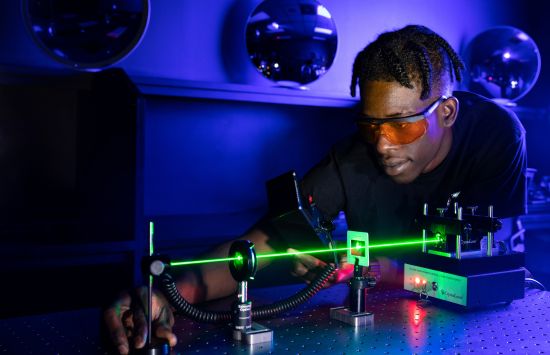
Enhancing training and workforce development
We provide access to research facilities and infrastructure across the U.S., ensuring the nation educates and maintains a skilled, robust and forward-thinking science and engineering workforce.
Our major facilities

U.S. Academic Research Fleet
Featuring over a dozen research vessels ranging in size, endurance and capabilities, the U.S. Academic Research Fleet supports research on the structure, dynamics, chemistry and biology of the ocean.
Through the NSF Regional Class Research Vessels investment, NSF is modernizing the fleet with advanced research ships that will provide researchers with state-of-the-art tools and technologies.

U.S. Antarctic Program
NSF has managed the U.S. science presence across the Antarctic continent for more than 60 years. NSF-managed facilities and infrastructure there include:
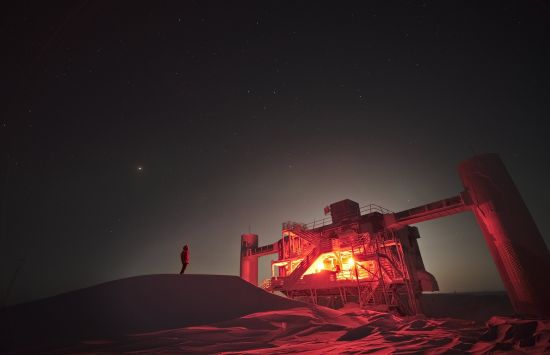
NSF IceCube Neutrino Observatory
NSF IceCube Neutrino Observatory is an enormous and unusual telescope: a grid of thousands of sensors embedded in a cubic kilometer of ice deep in the Antarctic ice sheet that allows it to detect tiny, elusive neutrinos — the least understood particles in the Standard Model of particle physics.
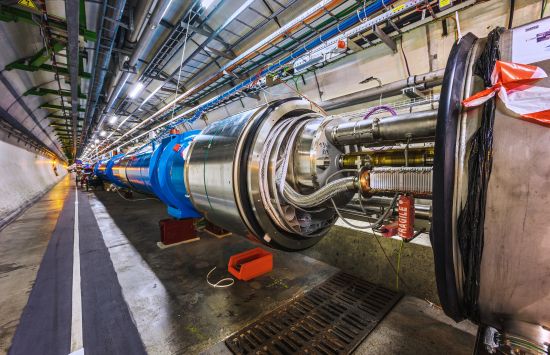
Large Hadron Collider
NSF supports two particle physics detectors — ATLAS and CMS — at the Large Hadron Collider in Switzerland. LHC is the most powerful particle accelerator ever constructed, making it the premier facility in the world for research in elementary particle physics.
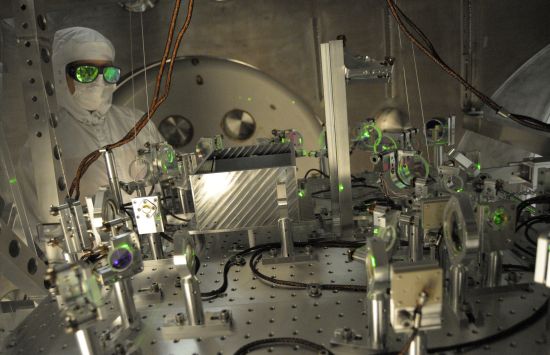
NSF Laser Interferometer Gravitational-Wave Observatory
NSF LIGO is the most sophisticated detector of its kind ever created. In 2015, mere days after its advanced instruments were switched on, NSF LIGO detected gravitational waves for the first time, confirming a major prediction of Albert Einstein's 1915 general theory of relativity.
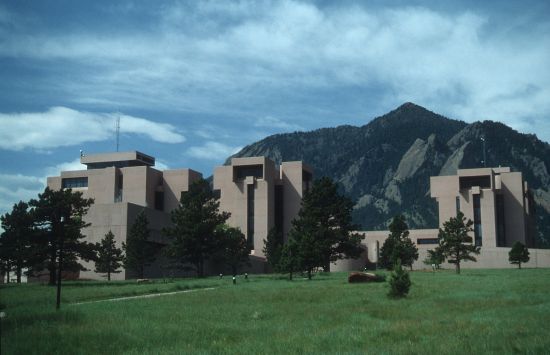
National Center for Atmospheric Research
NCAR provides world-class research programs, services and facilities that support research in atmospheric and geospace science, environmental sciences and geosciences.
NCAR's facilities include the NCAR-Wyoming Supercomputing Center, the Mauna Loa Solar Observatory, two research aircraft, a transportable ground-based radar system, and a suite of sophisticated weather and atmospheric models.
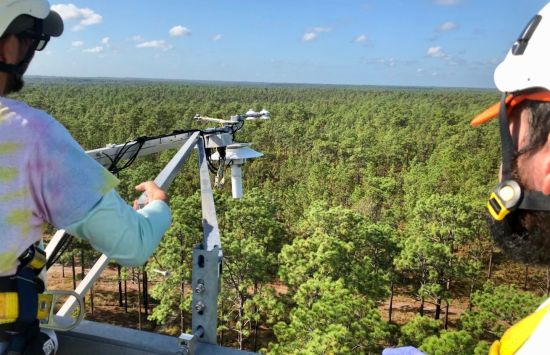
National Ecological Observatory Network
NEON is a continental-scale ecological observatory featuring cutting-edge sensor networks, instrumentation, observational sampling, natural history archive facilities and remote sensing. NEON enables research on the impacts of weather and land-use change, water use and invasive species on the nation's living ecosystems.
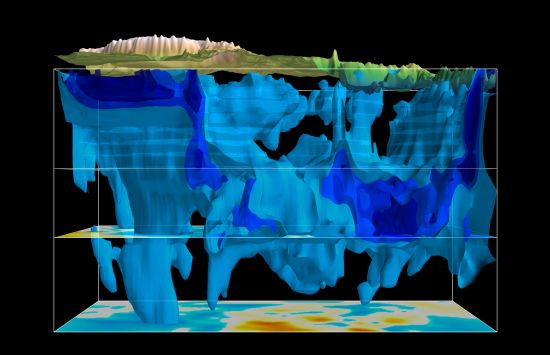
NSF National Geophysical Facility
The NSF NGF provides advanced geophysical instruments, data services and training resources that help researchers better understand Earth processes and natural hazards.
Supporting scientists, educators, students and public agencies nationwide, the facility enables research on earthquakes, volcanoes, water resources, climate systems and other dynamic Earth processes through shared instrumentation, open-access data and workforce development programs.
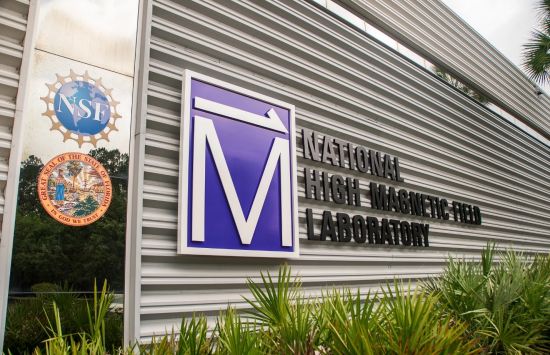
NSF National High Magnetic Field Laboratory
NSF MagLab is the largest and highest-powered magnet laboratory in the world, used by thousands of scientists to probe fundamental questions about materials, energy, life and the environment. It is an international leader in magnet design, development and construction, including the development of new superconducting materials.
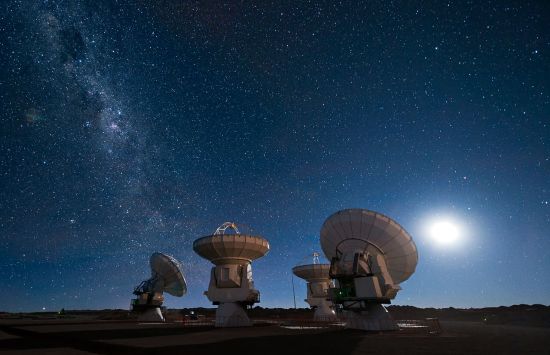
NSF National Radio Astronomy Observatory
NSF NRAO designs, builds and operates state-of-the-art radio telescopes used by scientists from around the world. Its facilities include:
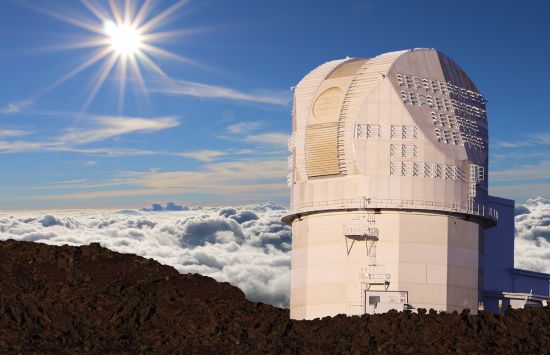
NSF National Solar Observatory
NSF NSO advances understanding of the sun — as a star, the heart of the solar system and the biggest external influence on life on Earth. It operates the new Daniel K. Inouye Solar Telescope: the largest, most powerful, solar telescope on Earth, which recently provided the most detailed images of the solar surface ever recorded.
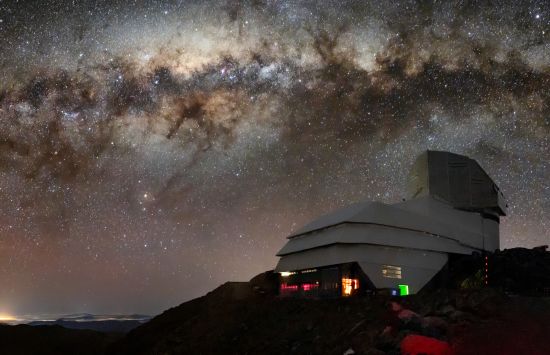
NSF NOIRLab
The NSF National Optical-Infrared Astronomy Research Laboratory is the nexus for U.S. ground-based, nighttime optical and infrared astronomy. Its observatories include:
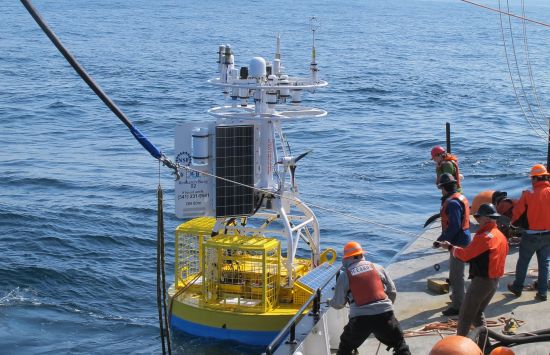
Ocean Observatories Initiative
The Ocean Observatories Initiative features a network of instruments, undersea cables and moorings that span the Western Hemisphere. The network supports research on the physical, chemical, geological and biological processes occurring in coastal and regional areas across the globe.
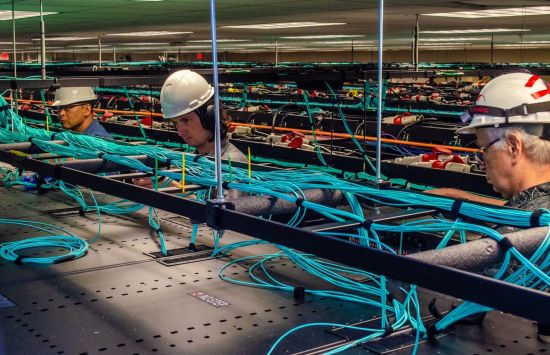
NSF Leadership Class Computing Facility
NSF LCCF is a nationwide research computing network that provides powerful supercomputers, large-scale data storage and artificial intelligence tools to help scientists and engineers tackle complex challenges across many fields.
LCCF enables researchers nationwide to tackle complex scientific challenges through open access to next-generation computational resources, software, services and workforce development opportunities.