
Abstract

The United States possesses the most capable research enterprise, the largest economy, and the most sophisticated societal
infrastructure in the world, yet it remains notably vulnerable to catastrophic damage and loss of life from natural hazards.
To place the Nation's vulnerability in perspective, 50 percent of the U.S. population lives within 50 miles of a coastline.
The physical infrastructure in coastal regions has grown dramatically over the past few decades and in the late 1990's was
worth about $3 trillion in the Gulf and Atlantic regions alone. Trillions of dollars in new seaboard infrastructure investment
are expected over the next several decades.
The Board presents herein an agenda for action - a National Hurricane Research Initiative (NHRI) - that will provide urgently
needed hurricane science and engineering research and education that engages relevant agencies across the Federal government;
involves industry, academia, and other levels of government; establishes highly focused priorities; strengthens disciplinary
research; creates multidisciplinary frameworks for studying the hurricane in an integrative fashion; and stimulates the efficient
transfer of research outcomes to operational practice. The present Federal investment in hurricane science and engineering
research relative to the tremendous damage and suffering caused by hurricanes is insufficient and time is not on our side.
The hurricane warning for our Nation has been issued and we must act vigorously and without delay.
Executive Summary

The United States possesses the most capable research enterprise, the largest economy, and the most sophisticated societal
infrastructure in the world, yet it remains notably vulnerable to catastrophic damage and loss of life from natural hazards.
Among weather hazards, hurricanes account for over half of the total damage inflicted. Hurricane-induced economic losses have
increased steadily in the U.S. during the past 50 years, with estimated annual total losses (in constant 2006 dollars) averaging
$1.3 billion from 1949-1989, $10.1 billion from 1990-1995, and $35.8 billion per year during the last 5 years. The 2005 season
was exceptionally destructive, with Hurricane Katrina pushing annual damage loss over the $100 billion mark for the first time
since records began. Added to this financial cost is the intolerable and unnecessary loss of life associated with hurricanes - 196
individuals perished from 1986-1995 and approximately 1,450 were lost in the past 2 years alone. Of course, hurricane impacts
are not confined to the U.S.; weather-related disasters worldwide have outnumbered their less predictable, but equally important,
geophysical counterparts (e.g., earthquakes, tsunamis, volcanoes) nine to one during the past decade.
To place the Nation's vulnerability in perspective, 50 percent of the U.S. population lives within 50 miles of a coastline. The
physical infrastructure in coastal regions has grown dramatically over the past few decades and in the late 1990's was worth
about $3 trillion in the Gulf and Atlantic regions alone. Trillions of dollars in new seaboard infrastructure investment are
expected over the next several decades. As our economy grows and the value of built-infrastructure continues to increase, the
economic and societal impacts of hurricanes also can be expected to escalate. Although not all coastal regions are directly
vulnerable to hurricanes, impacts from those regions that are affected can have national consequences, for example, via increased
fuel prices and displaced citizens. Additionally, even though decaying tropical storms are an important source of fresh water for
inland regions, associated flooding - occurring hundreds of miles from the coast and days after storm landfall - can be
astonishingly destructive. Historically, flooding has claimed more lives in the U.S. than any other weather phenomenon and
destructive tornadoes frequently accompany hurricanes.
Despite their destructive power, certainty of future occurrence, and advances made during the past decade in meteorological
understanding and prediction, we still know relatively little about the most important aspects of hurricanes from an integrative
perspective, including their internal dynamics and interactions with the larger-scale atmosphere and ocean; methods for
quantifying and conveying uncertainty and mitigating hurricane impacts; associated short and long term consequences on the
natural and built environment; and the manner in which society responds before, during, and after landfall. Billions of tax
dollars have been provided for rescue, recovery, and rebuilding after hurricanes strike. Also important is national investment
in the creation of new knowledge, and more effective application of existing knowledge to reduce these enormous public outlays,
loss of life, and the associated societal disruption caused by hurricanes.
Recent hurricanes - catastrophic but not unprecedented - have focused public attention on the imperative to enhance our understanding
of tropical weather systems and their multifaceted impacts, ranging from geophysical and engineering elements to human and economic
dimensions. They also have heightened our awareness of the need to use new knowledge to prepare more effectively for, and respond
more efficiently to, hurricanes that are an inevitable part of our future. Recognizing the many vital challenges associated with
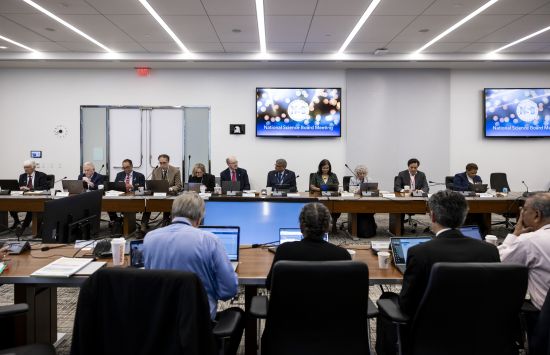
hurricanes in the broader context of natural disasters, the National Science Board (the Board) has engaged the Nation's experts
in science and engineering from government, academia, and industry in an intensive study to identify priorities in fundamental research,
and complementary applied or mission-directed research, which can improve our Nation's ability to become more resilient to hurricane impacts.
The Board presents herein an agenda for action - a National Hurricane Research Initiative (NHRI) - that will provide urgently needed
hurricane science and engineering research and education that engages relevant agencies across the Federal government; involves
industry, academia, and other levels of government; establishes highly focused priorities; strengthens disciplinary research;
creates multidisciplinary frameworks for studying the hurricane in an integrative fashion; and stimulates the efficient transfer
of research outcomes to operational practice. An additional annual national investment of approximately $300 million is required
to implement this critical agenda. Many facets of NHRI will also contribute to the knowledge needs of other critical priorities for
our Nation, such as homeland security requirements for an improved understanding of human behavior under conditions of extreme stress,
the need to quickly mobilize large numbers of people, and the ability to communicate information quickly. Owing to the clear and
increasing threat posed by hurricanes and their unique challenges relative to other natural hazards, the Board strongly recommends
that NHRI be established as a focused activity with well defined metrics for success, effective assessment mechanisms and a clearly
articulated pathway from research to operations. By strategically focusing on this specific and significant societal problem, NHRI
will be better positioned to achieve its vital goals while also contributing to broader programs that encompass shared challenges.
The present Federal investment in hurricane science and engineering research relative to the tremendous damage and suffering caused
by hurricanes is insufficient and time is not on our side. The hurricane warning for our Nation has been issued and we must act vigorously
and without delay.
Related Documents

|
|
No related documents at this time
|
Related Topics

|