


Media Advisory 11-010
Eyewitness Identification Reform: Psychological Science and Public Policy
On April 18, NSF's Distinguished Lecture series presents human learning and memory expert Steven Clark, who discusses improving eyewitness testimony
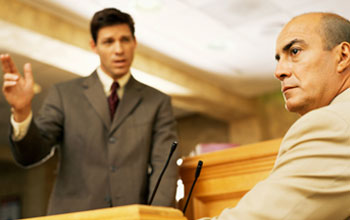
Steven Clark: New eyewitness identification procedures inconsistent with research data.
April 14, 2011
This material is available primarily for archival purposes. Telephone numbers or other contact information may be out of date; please see current contact information at media contacts.
Eyewitnesses sometimes make mistakes that result in falsely convicting innocent people. As a result and as a matter of law, several states and local jurisdictions are implementing new procedures for conducting eyewitness identifications.
But Steven Clark, a professor of Psychology at the University of California, Riverside, whose research is directed at issues of human learning and memory, says these new procedures may be based in part on a false premise. He argues that proponents, who contend the new procedures reduce the risk of false identifications and have little or no negative effect on correct identifications, may themselves be making a mistake.
Clark comes to the National Science Foundation on Monday, April 18 at 10 a.m. EDT to present a distinguished lecture titled "Eyewitness Identification Reform: Psychological Science and Public Policy." The lecture is sponsored by NSF's Directorate for Social, Behavioral & Economic Sciences.
Clark will use the lecture to argue that seeing the new procedures as being without cost is inconsistent with decision theories, and, more importantly, with research data. Ultimately, he will argue that to make sound public policy, the justice system needs to apply better theories about how people remember and make decisions. At the same time, he will assert that new policy frameworks must be developed that better connect eyewitness research to public policy.
| What: | NSF SBE Distinguished Lecture |
| Who: | Steven Clark, professor of Psychology at the University of California, Riverside |
| When: | April 18, 10 a.m. EDT |
| Where: | Room 555, Stafford II 4121 Wilson Boulevard Arlington, Va. 22230 |
| Metro: | Orange Line to Ballston |
Note: Visitors must RSVP to Lisa-Joy Zgorski or Bobbie Mixon in the Office of Legislative and Public Affairs to register for a visitor pass for access to the Stafford II building. Contact Lisa-Joy or Bobbie by email or phone (703) 292-8311 or (703) 292-8485.
-NSF-
Media Contacts
Bobbie Mixon, NSF, (703) 292-8485, email: bmixon@nsf.gov
Lisa-Joy Zgorski, NSF, (703) 292-8311, email: lzgorski@nsf.gov
Program Contacts
Jennifer L. Thornhill, NSF, (703) 292-7273, email: jthornhi@nsf.gov
The U.S. National Science Foundation propels the nation forward by advancing fundamental research in all fields of science and engineering. NSF supports research and people by providing facilities, instruments and funding to support their ingenuity and sustain the U.S. as a global leader in research and innovation. With a fiscal year 2023 budget of $9.5 billion, NSF funds reach all 50 states through grants to nearly 2,000 colleges, universities and institutions. Each year, NSF receives more than 40,000 competitive proposals and makes about 11,000 new awards. Those awards include support for cooperative research with industry, Arctic and Antarctic research and operations, and U.S. participation in international scientific efforts.

Connect with us online
NSF website: nsf.gov
NSF News: nsf.gov/news
For News Media: nsf.gov/news/newsroom
Statistics: nsf.gov/statistics/
Awards database: nsf.gov/awardsearch/
Follow us on social
Twitter: twitter.com/NSF
Facebook: facebook.com/US.NSF
Instagram: instagram.com/nsfgov