


Media Advisory 09-006
Experience the Nano World
More than 200 public events planned for this year's Nano Days
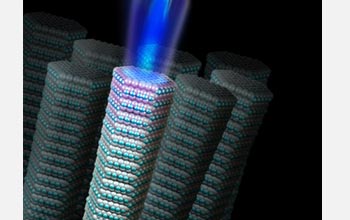
Nano Days celebrates the latest in nanoscience and nanotechnology.
March 25, 2009
This material is available primarily for archival purposes. Telephone numbers or other contact information may be out of date; please see current contact information at media contacts.
From Puerto Rico to Montana, museums, universities and research centers are gearing up for one of the largest outreach efforts ever attempted for educating the public about science and engineering at the nanoscale, a barely conceivable environment where one can manipulate objects as small as a single atom.
To bring nanoscale research directly to the public, the 2009 Nano Days events will run from March 28 through April 5, 2009, with activities such as hands-on experiments, nanotechnology product demonstrations, forums, laboratory tours and in at least one museum, juggling.
At the nanoscale, some materials are more reactive and can exhibit extraordinary properties, leading many scientists and engineers to believe advances in nanotechnology may bolster the U.S. economy and help the nation meet such challenges as affordable clean energy and personalized drugs. Already, many products on the market-from stain-repellant clothing to sun screens-incorporate nanotechnology.
Organized by the Nanoscale Informal Science Education Network (NISE Net)--created in 2005 with a grant from the National Science Foundation--Nano Days involves more than 200 different sites, an effort spearheaded by the Museum of Science in Boston, the Science Museum of Minnesota and San Francisco's Exploratorium.
For details about Nano Days activities in your neighborhood, or to download a digital Nano Days kit, go to http://www.nisenet.org/nanodays.
-NSF-
-
More than 200 institutions across the country will celebrate Nano Days 2009.
Credit and Larger Version

Media Contacts
Joshua A. Chamot, NSF, (703) 292-7730, email: jchamot@nsf.gov
Ken Vest, National Nanotechnology Coordination Office, (703) 292-4503, email: kvest@nnco.nano.gov
Margaret Glass, Association of Science-Technology Centers, (202) 783-7200, email: mglass@astc.org
Principal Investigators
Larry Bell, Museum of Science, Boston, (617) 589-0282, email: lbell@mos.org
The U.S. National Science Foundation propels the nation forward by advancing fundamental research in all fields of science and engineering. NSF supports research and people by providing facilities, instruments and funding to support their ingenuity and sustain the U.S. as a global leader in research and innovation. With a fiscal year 2023 budget of $9.5 billion, NSF funds reach all 50 states through grants to nearly 2,000 colleges, universities and institutions. Each year, NSF receives more than 40,000 competitive proposals and makes about 11,000 new awards. Those awards include support for cooperative research with industry, Arctic and Antarctic research and operations, and U.S. participation in international scientific efforts.

Connect with us online
NSF website: nsf.gov
NSF News: nsf.gov/news
For News Media: nsf.gov/news/newsroom
Statistics: nsf.gov/statistics/
Awards database: nsf.gov/awardsearch/
Follow us on social
Twitter: twitter.com/NSF
Facebook: facebook.com/US.NSF
Instagram: instagram.com/nsfgov